Published September 28, 2026
Why Some Houses Have a $100,000 Difference in Value Even Though They Look Almost Identical

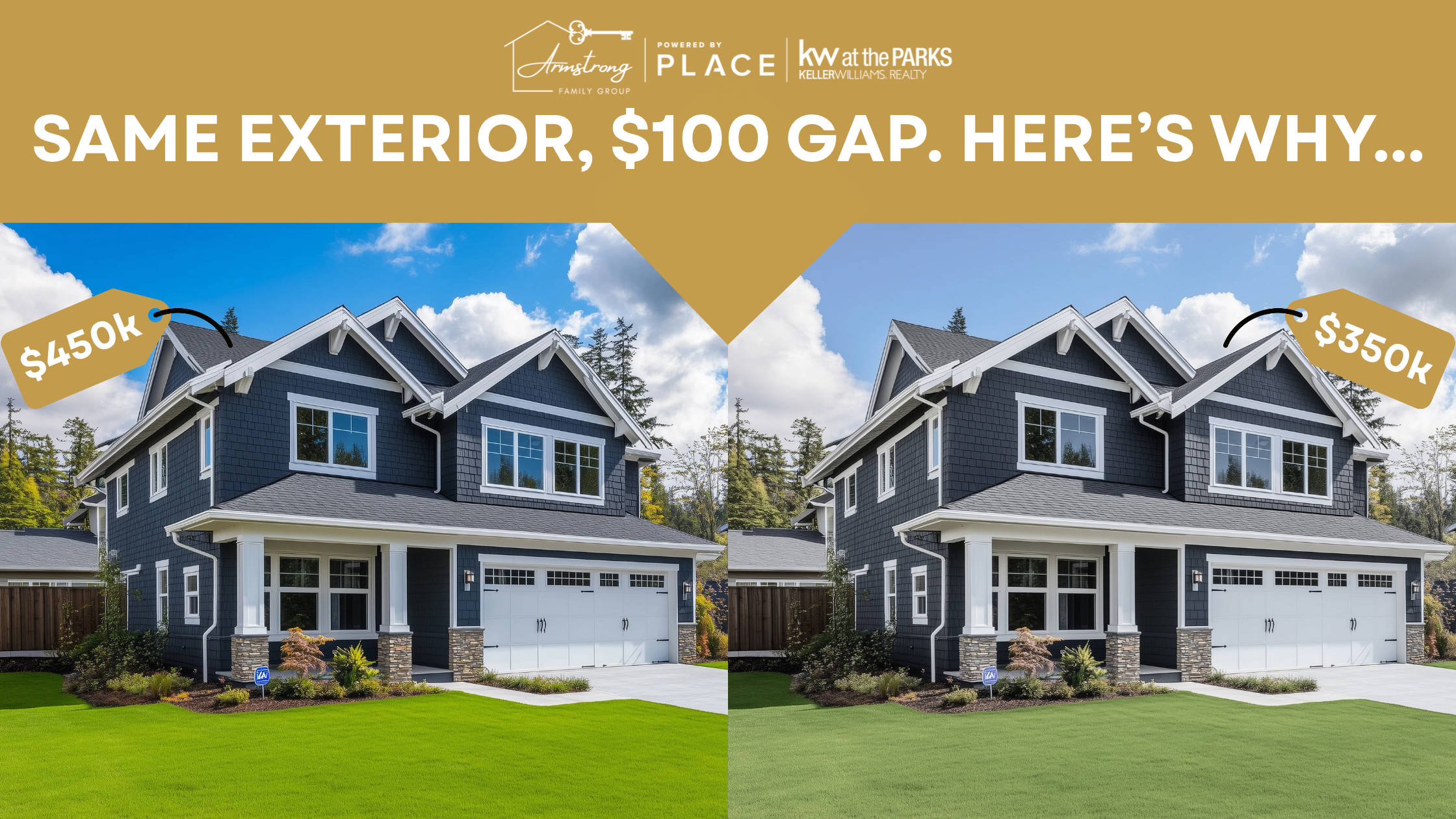
Two homes can have the same number of bedrooms, similar square footage, similar kitchens, and even look nearly identical from the outside—and still have a six-figure difference in value.
Why?
Because the price of a home isn't based solely on what you see.
1. 📍 Location Within the Location
Even homes in the same city can have significant differences based on:
- School zones
- Distance to major roads
- Walkability
- Nearby businesses
- Traffic
- Neighborhood boundaries
- Views
- Proximity to parks, lakes, or other amenities
Sometimes moving just a few streets can change the value significantly.
2. 🏡 Lot Size & Lot Characteristics
Two houses may have the same 2,000-square-foot floor plan, but one could sit on a much larger or more usable lot.
Things such as:
- Lot size
- Backyard usability
- Corner lots
- Privacy
- Waterfront access
- Lot shape
- Flood exposure
can affect value.
3. 🛠️ What's Behind the Walls
This is one of the biggest differences buyers can't see in listing photos.
Two homes may look identical, but one could have:
- A newer roof
- Updated electrical
- New plumbing
- New HVAC
- Updated windows
- Better insulation
- Fewer deferred repairs
A house that looks identical may have substantially different future maintenance costs.
4. 📅 Age & Condition
A five-year-old roof versus a 20-year-old roof isn't visually obvious in a quick walkthrough—but it can represent a significant future expense.
The same applies to HVAC systems, water heaters, appliances, and other major components.
5. 💰 Recent Comparable Sales
Real estate value is also influenced by what similar properties have recently sold for.
This is where the Comparative Market Analysis (CMA) comes in.
A home isn't necessarily worth what the owner paid for it or what the neighbor is asking. Recent comparable sales provide important evidence of market value.
6. 🏫 School Districts & Boundaries
Two properties can be physically close but fall into different school boundaries.
That can affect demand and, consequently, the prices buyers are willing to pay.
7. 🌊 Insurance & Risk
Especially in Florida, the cost and availability of insurance can become part of the overall economics of owning a property.
Flood exposure, wind mitigation features, roof age, construction characteristics, and other factors can affect insurance considerations.
8. 📈 The Market Is About More Than the House
This is the bigger lesson:
A home isn't valued solely by what it looks like. It's valued by the combination of the property, location, condition, market conditions, and what buyers are willing to pay for comparable properties.
The next time you see two nearly identical houses with dramatically different prices, don't just ask, “Why is one more expensive?”
Ask:
What is different about the land, location, condition, ownership costs, and recent comparable sales?
That's where the real difference in value often becomes visible.